

U.S. Legal & Business Guide for International Companies
Expanding into the United States comes with real legal and practical responsibilities. Whether you’re selling products, trading across borders, navigating tariff changes, or securing your first commercial space understanding the rules can protect your business and open new doors.
In this edition, we cover four essential topics every foreign business owner operating in the U.S. should know: Product Liability, E-1 Trader Visa, Customs Duties & IEEPA (Trump’s Tariffs), and Commercial Leasing.
Thank you for being part of our community.
Happy reading!
Product Liability: What Every Business Selling in the U.S. Should Know For foreign Manufacturers, Importers & Distributors
If you sell a product in the United States and that product causes harm, you could be held legally responsible, even if you’re based outside the country. This is what product liability means, and it’s one of the most important legal concepts for any business that wants to enter the U.S. market.
The U.S. takes consumer safety seriously. Companies have a legal obligation to make sure their products are reasonably safe. If something goes wrong, a product injures someone, damages property, or causes financial loss, the injured party has the right to seek compensation.
Three Types of Product Defects:
– Design defect the product is unsafe by design, before it’s even made.
– Manufacturing defect something went wrong during production, so some units are faulty even though the design is fine.
– Failure to warn the product didn’t come with proper instructions or safety warnings, and someone got hurt because of it.
One thing that surprises many foreign businesses: liability doesn’t stop at the manufacturer. If you import, distribute, or sell a product in the U.S., you can also be held responsible, even if you didn’t make it and didn’t know it was defective.
“You don’t have to be the manufacturer to be held liable. Being part of the supply chain is enough.”

What can you do to protect your business?
A few key steps go a long way: test your products against U.S. safety standards before they hit the market, make sure your labels and instructions are clear and complete, stay current with regulations from agencies like the Consumer Product Safety Commission (CPSC) or the FDA (if applicable), and consider getting product liability insurance.
Our litigation attorneys are equipped to assist you in navigating product liability disputes or conducting a thorough review of your contractual and legal obligations. Proactive legal guidance at the outset can significantly reduce future financial exposure and risk. Get in touch with us at contact@onalgallant.com
For questions or consultations, please contact us at:
contact@onalgallant.comThe E-1 Treaty Trader Visa: A Path for Businesses Built on Trade
For companies with substantial trade activity between their home country and the U.S.
If your business is built around trading goods, services, or technology between your home country and the United States, there’s a visa specifically designed for you: the E-1 Treaty Trader visa.
The E-1 allows business owners and key employees to live and work in the U.S. on a non-immigrant basis which it can be renewed and maintained long-term as long as the trade continues.

Basic Requirements:
Your country must have a qualifying trade treaty with the United States.
The trade must be “substantial” meaning regular and significant in volume or value.
At least 50% of your total international trade must be between your home country and the U.S.
The visa covers the principal trader as well as qualifying employees and immediate family members.
The term “substantial trade” doesn’t mean you need to be a large corporation. What matters is that the trade is ongoing and real, not a one-time transaction. This can include physical goods, services, banking, insurance, transportation, and more.
For many international business owners, the E-1 is a practical and underutilized option. If you’re already doing consistent business with U.S. partners or clients, it’s worth exploring whether you qualify. A good starting point is checking whether your country is on the U.S. treaty list, and from there, reviewing whether your trade volume meets the threshold.
Our attorneys can help you determine if your trade activity meets the requirements, get in touch to learn more.
To explore your options, contact our team at contact@onalgallant.com and we’ll walk you through the process.
For questions or consultations, please contact us at:
contact@onalgallant.comTariffs & the IEEPA Ruling: What's Changing and Why It Matters
For importers & exporters navigating U.S. trade policy
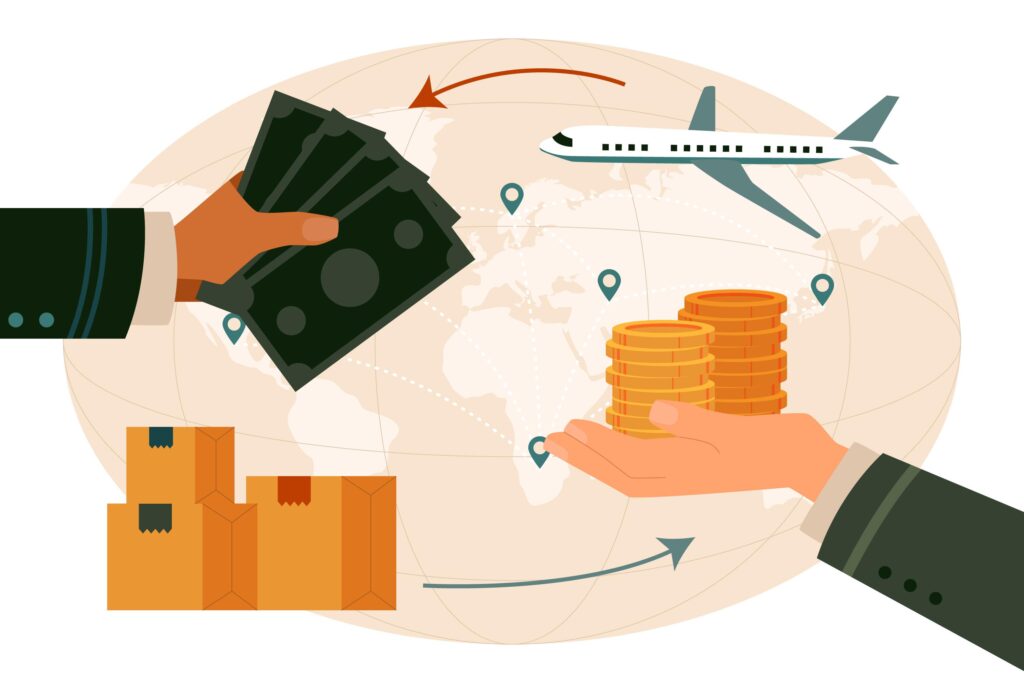
Tariffs are taxes on imported goods. In the U.S., they’ve been used increasingly as a trade policy tool, and for businesses importing products into the country, they can have a direct and significant impact on costs and pricing strategy.
In recent years, the U.S. government imposed a broad set of tariffs using a law called the International Emergency Economic Powers Act (IEEPA). These tariffs affected a wide range of industries and added costs that many importers simply had to absorb.
“A recent court ruling has opened the door for some importers to recover tariffs they already paid.”
But here’s what’s new: the U.S. Supreme Court recently ruled that certain tariffs imposed under IEEPA were not actually authorized by law. Following that ruling, the U.S. Court of International Trade (CIT) the specialized court that handles trade and customs cases began reviewing related cases, including the possibility of refunding duties that were previously collected.
What This Means for Your Business
If you paid tariffs under IEEPA, you may have grounds to file a claim for a refund.
Whether you qualify depends on the specific products, timing, and how the claim is filed.
Trade policy in the U.S. changes quickly, staying informed is part of doing business here.
This is a developing area of law, and the window to act may be limited. If your business has been affected by these tariffs, it’s worth looking into whether a refund claim applies to your situation.
If your business was affected, reach out to us at contact@onalgallant.com we’ll help you understand your options.
Commercial Leasing for Foreign Investors How to Secure a Space Without U.S. Credit History
For foreign entrepreneurs & investors opening a business location in the U.S.
One of the first practical challenges foreign investors face when setting up a U.S. business is finding a commercial space. Whether it’s an office, restaurant, retail store, or warehouse, at some point, you’ll likely need to sign a lease. And that process works very differently here than in most other countries.
The credit problem. U.S. landlords typically want to see a credit history before signing a lease. For foreign investors who are new to the country, that history simply doesn’t exist yet, which creates an immediate barrier. But it’s a barrier that can be worked around.
Common Ways to Overcome the Credit Hurdle
– Larger security deposit, offering 3–6 months of rent upfront instead of the standard 1–2 months signals financial stability to the landlord.
– Personal guarantee, you personally guarantee the lease obligations, which gives the landlord additional security.
– Bank reference letters, a letter from your bank in your home country showing strong financial standing can substitute for a U.S. credit check.
– Prepaid rent, some landlords will agree to a lease if several months of rent are paid in advance.
– Company financials, if your business has revenue or assets, providing financial statements can demonstrate your ability to meet rent obligations.
Other things to watch out for. Commercial leases in the U.S. are much more complex than residential ones and far more negotiable. Before signing anything, make sure you understand rent escalation clauses (how and when rent increases), who is responsible for maintenance and repairs, what happens if you need to exit the lease early, and whether property taxes or insurance costs are passed on to you as the tenant (known as a “triple net” or NNN lease).
Navigating U.S. commercial leases as a foreign investor comes with unique challenges, let us help you get it right from the start. A lease review before you sign can save you from costly obligations down the road. Reach out at contact@onalgallant.com
We hope these insights help you navigate the legal and business landscape as you grow your presence in the United States.
Our team remains available to assist with product compliance, visa strategy, trade claims, and commercial matters.
For questions or consultations, please contact us at:
contact@onalgallant.com